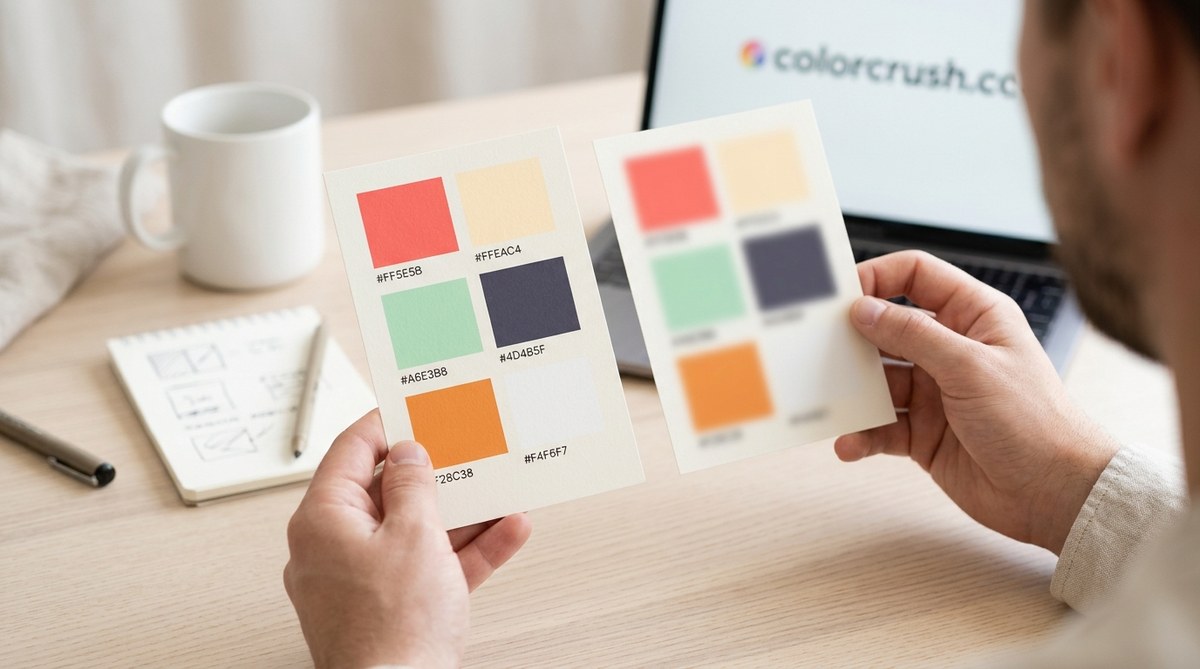
You have probably seen color analysis videos where an expert holds drapes up to someone’s face. The colors change, and suddenly the person looks radiant. You might wonder if you can get those results without spending money on a professional consultation. You can. The trick is a technique called the squint test. It costs nothing, takes ten seconds, and tells you if a color works with your natural features or fights against them.
The color analysis squint test is a free, at home method that uses your eyes to check contrast and harmony. By partially closing your eyes to soften your vision, you can see which colors blur smoothly into your skin and which ones create harsh or dull spots. This helps you build a personal palette without a paid draping session.
Why the Squint Test Works
Your eyes are great at noticing detail. But detail can distract you from the big picture. When you look at a shirt in a mirror, you notice the fabric texture, the stitching, and the pattern. You miss the overall effect.
The squint test removes that visual noise. By narrowing your eyelids, you soften your focus. Colors blur together. Shadows and highlights become more obvious. You stop seeing the garment and start seeing the relationship between the color and your skin.
This method comes from the same principle that painters and photographers use. They squint to check value contrast. A color that looks good up close might disappear when you blur your vision. A color that seems boring at arm’s length might create beautiful harmony.
How to Perform the Color Analysis Squint Test
You need two things: a mirror in natural light and a piece of fabric or clothing in the color you want to test. Do not wear makeup for the most accurate result.
- Stand in front of a window or go outside. Indirect daylight works best. Avoid harsh overhead lights or yellow bathroom bulbs.
- Hold the color close to your face. Tuck it under your chin or drape it over your shoulders so it sits right next to your skin.
- Look at your reflection and slowly close your eyes until your lashes almost touch. Your vision should go soft and blurry.
- Notice what happens to your face. Does your skin look smooth and even? Do your eyes stand out? Or does your face look gray, splotchy, or washed out?
- Repeat with a second color. Compare the two results side by side.
The goal is to see which colors make your features pop and which ones make you fade.
What to Look For When You Squint
Your blurred vision will show you three things about each color.
- Contrast. A good color creates a clear difference between your skin and the fabric. Your face looks defined. A bad color makes your skin and the fabric blend into a muddy mess.
- Evenness. The right color smooths out your skin tone. Shadows under your eyes or redness around your nose become less noticeable. The wrong color exaggerates every imperfection.
- Glow. A flattering color seems to bounce light toward your face. Your eyes look brighter. Your cheeks look warmer. A poor color absorbs light and makes you look tired.
Signs Your Palette Passes
When a color passes the squint test, you will see these signals:
- Your face is the first thing you notice, not the fabric
- Your skin looks clear and unified
- Your eyes have a visible sparkle
- Your overall impression is balanced and calm
Signs Your Palette Fails
When a color fails, look for these red flags:
- The fabric grabs your attention before your face does
- Your skin looks gray, yellow, or ghostly
- Dark circles or blemishes become more obvious
- Your face seems disconnected from the color
Common Mistakes to Avoid
Even a simple test can go wrong if you do not set up correctly. Here are the most frequent errors and how to fix them.
| Mistake | Why It Happens | How to Fix It |
|---|---|---|
| Testing in artificial light | Yellow or blue bulbs change how colors look | Move to a window or go outside |
| Wearing foundation or concealer | Makeup evens out your skin and hides your real undertone | Test with a bare, clean face |
| Squinting too hard | Closing your eyes all the way blocks too much light | Keep a thin slit of vision open |
| Holding the color too far away | Distance changes how the color interacts with your face | Hold the fabric right under your chin |
| Comparing more than two colors at once | Too many options confuse your eye | Test two colors, pick the winner, then test the winner against a third |
What to Do With Your Results
Once you identify a color that passes the squint test, write it down. Build a small list of five to ten winners. These become the foundation of your personal palette.
From there, you can branch into related shades. If a soft dusty rose looks great on you, try a warmer salmon or a deeper mauve. If a muted olive green works, test a brighter emerald or a darker forest green. The squint test helps you confirm each new color before you buy.
“The squint test is the cheapest color analysis tool in the world. It strips away the noise and shows you the truth. I have used it with hundreds of clients, and it never lies.” — Rachel K., Personal Color Analyst
When the Squint Test Is Not Enough
The squint test works for checking individual colors. It does not tell you your seasonal palette or your exact undertone. If you want a full color analysis system, you might need a more structured approach.
For a deeper understanding of how colors work together, read about mastering color harmony. If you want to avoid common pitfalls, check out these color palette mistakes that make your UI look dated. And if you are curious about how saturation affects your look, the 2026 guide to choosing saturation levels has you covered.
How to Test Your Entire Wardrobe in One Afternoon
You do not need to test every single item you own. Use this scanning method to clean out your closet.
- Pull out all your tops, scarves, and jackets that sit near your face
- Sort them by color family: blues, reds, neutrals, and so on
- Test the most saturated shade in each family first
- If that shade passes, the lighter and darker versions of it will probably pass too
- If the saturated shade fails, test a muted version of the same color
- Discard or donate anything that makes your face look gray or dull
This system saves time and keeps you from second guessing yourself.
A Real World Example
Imagine you have two blue shirts. One is a bright royal blue. The other is a dusty slate blue. You hold the royal blue under your chin and squint. Your face looks sharp. Your eyes look clear. The royal blue passes.
Now you hold the slate blue next to your face. You squint. Your skin looks flat. Your eyes look tired. The slate blue fails.
You now know that bright, clear blues work for you. Muted, grayed out blues do not. Next time you shop, you skip the washed out denim and reach for the vivid cobalt. That is the squint test in action.
Your Palette Is Waiting
The color analysis squint test gives you honest feedback in seconds. No app required. No expensive drapes needed. Just natural light, a mirror, and your own eyes.
Start with one color today. Hold it up. Squint. See what happens. Your personal palette is already in your closet. You just need to find it.