Color mixing is the backbone of any successful painting or design. Whether you’re blending paints on a palette or combining digital hues, understanding how to mix colors effectively transforms your work from flat to vibrant. Mastering these techniques unlocks your ability to create more accurate shades, dynamic gradients, and harmonious compositions. With a solid grasp of color mixing, your visuals will captivate viewers and elevate your artistic skills.
Understanding fundamental color mixing techniques enables artists to craft vibrant, precise hues. Practicing these methods enhances visual appeal and confidence in your work, whether using traditional or digital media.
Understanding the fundamentals of color blending
Before diving into specific techniques, it’s essential to grasp the core principles that govern color mixing. Colors are not just random combinations; they follow predictable patterns based on their relationships on the color wheel. When you understand hue, saturation, and value, you can manipulate colors more intentionally and with greater control.
The color wheel as your guide
The color wheel is a visual tool that arranges hues in a circle. It shows how colors relate to each other and helps you predict the results of mixing different shades. Primary colors — red, blue, and yellow — are the foundation. Mixing primaries creates secondary colors like green, orange, and purple. Tertiary colors result from combining a primary with a neighboring secondary.
Key color relationships
- Complementary colors sit opposite each other on the wheel. Mixing them often results in neutral or muddy hues if overdone, but can produce vibrant accents when used correctly.
- Analogous colors are next to each other and blend smoothly, creating harmonious transitions.
- Split complements include a primary color and the two colors adjacent to its complement, offering balanced contrast.
Practical color mixing techniques to elevate your art
Developing a toolkit of effective methods allows you to produce the colors you envision. Here are some foundational techniques to practice and incorporate into your process.
1. Creating Tints, Shades, and Tones
- Tints are produced by adding white to a color. They are lighter and softer.
- Shades involve mixing in black, resulting in darker, more subdued hues.
- Tones are created by blending a color with gray, providing muted versions suitable for realistic shading.
2. Building color gradients through blending
Gradual transitions between colors can be achieved by:
- Wet-on-wet blending in traditional media.
- Using digital brushes with opacity controls.
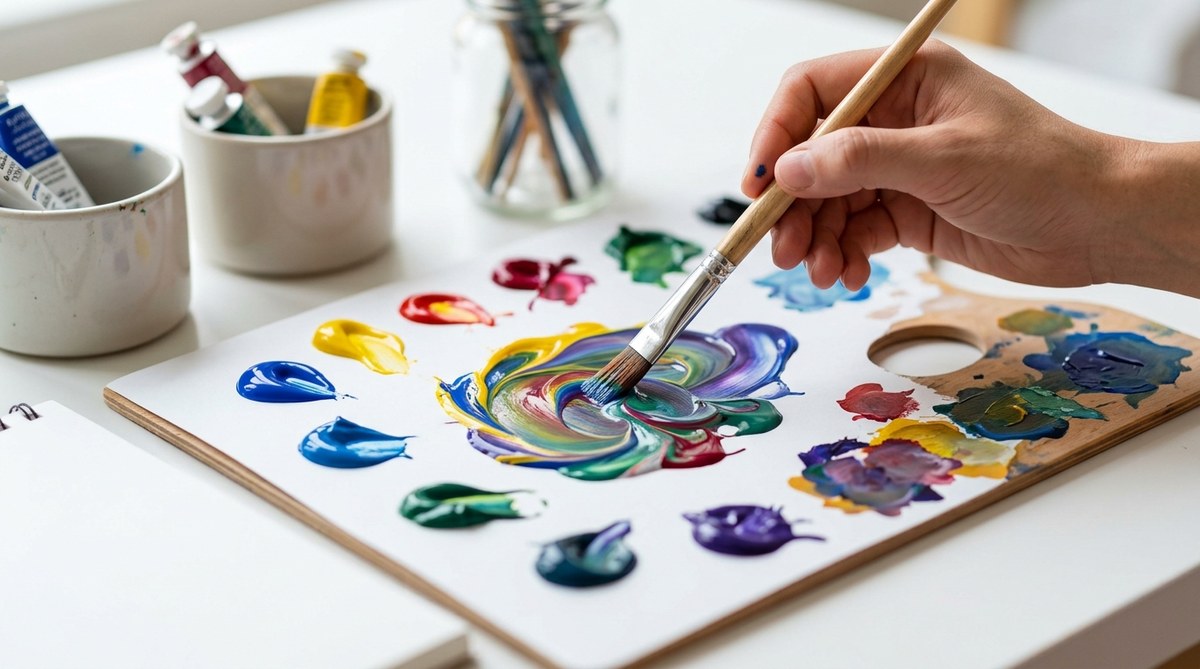
- Gradually mixing two colors on your palette or canvas, softening the boundary.
3. Adjusting hue through mixing
Changing a color’s hue involves adding small amounts of neighboring colors. For example, to shift red toward orange, add a touch of yellow. To cool a hue, incorporate a small amount of its complementary.
4. Using complementary colors to tone down or enrich
Mixing a hue with its complement can mute brightness, creating more natural shades. Conversely, a small amount of a complement can add depth and richness to a color.
5. Mixing from primary colors for custom hues
Start with the three primaries and experiment with their ratios. This approach grants full control over the final hue, saturation, and value, especially useful in digital tools or traditional palettes.
Common pitfalls in color mixing and how to avoid them
Even experienced artists encounter mistakes that can derail their color harmony. Recognizing these helps in developing better habits.
| Mistake | How to Avoid | Explanation |
|---|---|---|
| Overmixing colors | Mix just enough for your purpose | Overmixing can lead to dull, muddy hues. Keep your mixing controlled. |
| Using too much of one color | Add small amounts gradually | Small additions allow precise adjustments and prevent overshooting. |
| Ignoring color temperature | Pay attention to warm and cool tones | Mixing warm and cool hues without consideration may result in mismatched colors. |
| Not testing mixes | Always test on scrap material | Testing ensures your colors will perform as expected in your artwork. |
“Remember that patience and observation are your best allies in color mixing. Take your time to see how colors interact and adjust accordingly.” — professional artist Jane Doe
Practical tips for mastering color mixing
- Use a limited palette: Fewer colors force you to learn how they mix and prevent confusion.
- Keep notes: Record your successful mixes for future reference.
- Practice color charts: Create swatches and charts to visualize how different combinations behave.
- Observe real-world colors: Study how colors shift in different lighting conditions.
- Use digital tools: Apps and software can simulate color mixing, allowing experimentation without waste.
Applying color mixing techniques in your projects
When working on a landscape, portrait, or abstract, understanding how to blend colors enhances the overall composition. For example, creating realistic skin tones involves mixing primary colors with a touch of earth tones. In landscapes, layering transparent glazes of different hues can produce depth and vibrancy.
Experiment with mixing colors directly on your palette and on your canvas. Don’t be afraid to try unconventional combinations. Sometimes unexpected mixes lead to the most striking effects.
Final thoughts on mastering color mixing
Consistent practice is key. Over time, you’ll develop an intuitive sense of how colors interact. Your work will become more vibrant and harmonious, capturing the mood and realism you aim for. Remember, every artist’s journey involves trial and error. Embrace each mistake as a stepping stone toward mastery.
Keep experimenting, stay curious about color relationships, and enjoy the process of discovering new hues. With patience and dedication, your visuals will become more compelling and true to your artistic vision.
A vibrant future with confident color blending
Color mixing is both an art and a science. By understanding fundamental techniques and applying them diligently, you unlock endless creative possibilities. Whether working with traditional paints or digital media, the principles remain the same. Practice regularly, observe keenly, and let your colors tell your story. Your next masterpiece awaits with colors that are as lively and nuanced as your imagination.